

1. Introduction
Fire safety in hotels is of critical importance both for the protection of human life and in terms of the legal, criminal and administrative liabilities of hotel operators. Deficiencies in fire safety may lead to the cancellation of the business opening and operating license, sealing of the facility, suspension or revocation of the Tourism Operation Certificate, exclusion from insurance coverage, substantial compensation liabilities and criminal investigations.
Furthermore, holding an old operating license does not provide any exemption from newly enacted regulations. As the Regulation on Fire Protection of Buildings is updated, all facilities remain under a continuous obligation to comply with the current legislation.
2. Fire Safety Legislation and Compliance Obligations
2.1 Regulation on Fire Protection of Buildings
All technical criteria regarding fire safety are regulated under the Regulation on Fire Protection of Buildings. Provisions concerning escape routes, fire detection systems, sprinkler systems, smoke extraction, compartmentation, emergency lighting and directional signage are mandatory and binding.
2.2 Impact of Legislative Amendments
Upon amendments to the legislation, all hotels — including those operating under old licenses — are required to comply with the updated rules. An old operating license does not create any exemption from newly introduced obligations.
3. Mandatory Fire Safety Measures in Hotels
3.1 Structural Requirements
Emergency staircases, fire-resistant doors, smoke control systems, zoning and structural fire resistance are mandatory requirements for hotel facilities.
3.2 Technical System Requirements
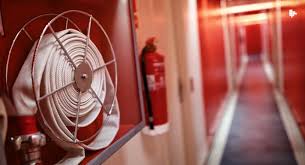
Hotels must be equipped with fire detection systems, emergency announcement systems, sprinkler systems, fire hose cabinets, hydrant systems, portable fire extinguishers, emergency guidance systems and automatic fire suppression systems for kitchens.
3.3 Operational Obligations
A fire safety officer must be appointed, staff must be trained, fire drills must be conducted, emergency action plans must be prepared and fire safety systems must be maintained on a regular basis.
3.4 Technical Requirements Varying According to Facility Height, Capacity and Classification
Pursuant to the Regulation on Fire Protection of Buildings, certain obligations do not apply uniformly to all hotels. Requirements vary depending on building height, bed capacity, corridor length, hazard classification and usage type.
For hotels exceeding a height of 21.50 meters, sprinkler systems are mandatory. As capacity increases, additional emergency staircases and emergency announcement systems may be required. Technical assessments must be carried out on a project-specific basis for each facility.
4. Legal and Criminal Liabilities
4.1 Administrative Sanctions
If deficiencies are detected, an official report is prepared and a period may be granted for remediation. If deficiencies are not remedied within the given period, the operating license may be suspended or revoked. In cases involving imminent danger to life, sealing may be carried out without granting any remediation period.
4.2 Compensation Liability
The hotel operator is liable for all damages arising as a result of a fire. Insurance companies may refuse to pay compensation or may exercise recourse rights if non-compliance with legislation is identified.
4.3 Criminal Liability
Acts such as causing a fire through negligence or causing death or injury by negligence give rise to criminal liability.
4.4 Increased Liability for Non-Compliant Facilities
For facilities operating under old licenses that fail to comply with updated regulations, negligence is assessed more severely.
5. Cancellation of Business Opening and Operating License Process
5.1 Inspection
If deficiencies are identified during inspections conducted by municipalities or fire departments, an official inspection report is prepared.
5.2 Granting a Period for Remediation
If no immediate danger to life exists, the operator is granted a period to remedy the identified deficiencies.
5.3 Continued Non-Compliance
If deficiencies are not remedied within the granted period, the operating license may be suspended or revoked.
5.4 Sealing
Upon revocation of the operating license, the facility is sealed and its operations are halted.
6. Suspension or Revocation of the Tourism Operation Certificate Process
6.1 Notification
License revocation and sealing procedures are reported to the Ministry of Tourism.
6.2 Review
The Ministry reviews compliance with the Regulation on Fire Protection of Buildings, guest safety measures and the facility’s tourism qualifications.
6.3 Suspension or Revocation
If deficiencies are deemed serious, the Tourism Operation Certificate may be suspended or revoked.
7. Managers and Public Officials Responsible for Fire Safety
7.1 Responsible Personnel Within the Facility
- General Manager
- Technical Manager
- Security Manager
- Operations Manager
- Fire Safety Officer
- Occupational Health and Safety Specialist
- Maintenance Technician
These individuals are responsible for ensuring that fire safety systems are operational, training is provided, drills are conducted and emergency plans are implemented.
7.2 Responsible Public Authorities
- Municipal Licensing Units
- Fire Department Directorates
- Ministry of Tourism Inspection Units
- Governorate Inspection Commissions
These authorities inspect compliance with legislation and impose administrative sanctions where necessary.
8. Compliance Recommendations for Hotel Managers
Legislative amendments should be monitored regularly, technical maintenance records should be kept systematically, fire drills should be conducted and fire safety projects should be updated during renovation works.
Frequently Asked Questions
1. Are hotels operating under old licenses required to comply with new regulations?
Yes. As regulations are amended, all hotels are required to comply.
2. Can a hotel continue operating if the fire detection system is not functioning?
No. This constitutes grounds for immediate closure.
3. Is a sprinkler system mandatory for every hotel?
It becomes mandatory depending on building height and capacity.
4. Does failure to conduct fire drills give rise to criminal liability?
Yes. Lack of training is considered negligence.
5. Can insufficient emergency staircases lead to license revocation?
Yes. Such deficiencies may result in both license revocation and sealing.
6. Why is the Tourism Operation Certificate revoked?
It may be revoked due to fire safety deficiencies, license revocation or regulatory non-compliance.
7. Why may an insurance company refuse to cover fire damage?
Coverage may be denied in cases of regulatory violations or missing systems.
8. Does non-compliance with the Regulation on Fire Protection of Buildings give rise to criminal liability?
Yes. Criminal investigations may be initiated against facility managers.
9. What are the consequences of not appointing a fire safety officer?
Both administrative sanctions and a finding of gross negligence may arise.
10. Is preparing a fire scenario mandatory?
Yes. Hotels are required to prepare emergency scenarios.
11. Why is an automatic kitchen fire suppression system mandatory?
Fires caused by cooking oils pose a high risk and absence of such systems constitutes grounds for closure.
12. Can failure of the generator to activate lead to license revocation?
Yes. If emergency lighting does not function, life-threatening conditions arise and the license may be revoked.
REFERENCES
www.mevzuat.gov.tr

Leave A Comment
Your email address will not be published. Required fields are marked *